
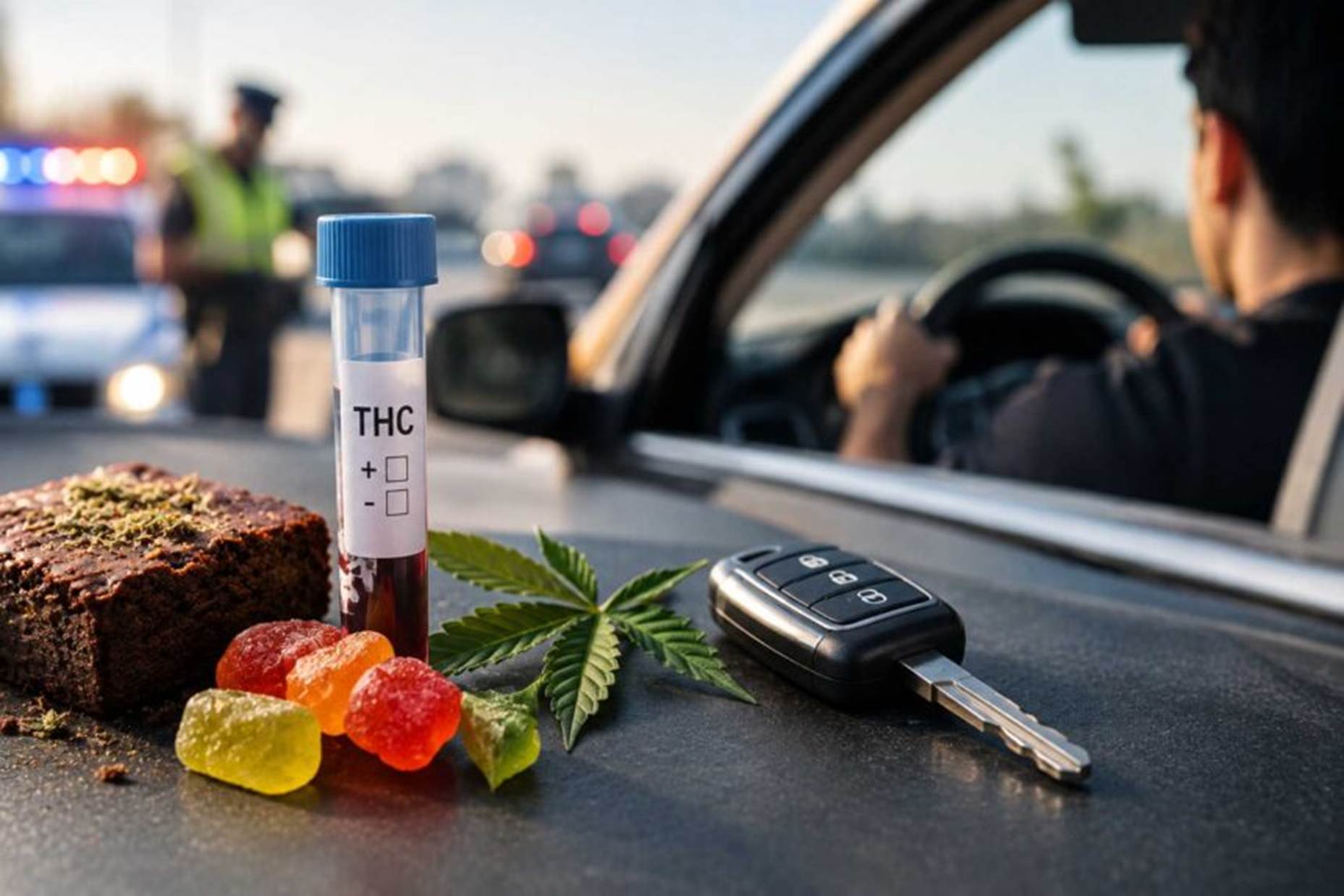
A driver eats a cannabis gummy, waits a while, gets behind the wheel and returns a low THC reading. Surely that settles it? A new randomised trial says it does not. Cannabis edibles and driving do not follow the tidy rule that a small number in the blood means a clear head.
That rule matters because of a proposal now being run in Australia. It would exempt medicinal cannabis patients from the presence offence if they were not impaired and took their medicine as prescribed. The catch is that it depends on someone being able to show a driver is not impaired, and the evidence says a blood test cannot do that.
A Canadian trial, a Swiss study from 2005, a 2018 hair testing study and a research review on medicinal cannabis and driving each add a piece. Science should protect the people on the road. It should not be bent to protect the habits of the person holding the gummy.
 What the Toronto Trial Found
Researchers at the Centre for Addiction and Mental Health in Toronto recruited 40 adults aged 19 to 45 who used cannabis at least weekly and edibles at least monthly. Across four sessions each volunteer ate gummies containing 0, 2, 10 or 20 mg of THC, and nobody knew which dose they had. The results appeared in JAMA Network Open on 31 August 2026.
A driving simulator measured how well they held their lane two and five hours after eating. Compared with placebo, lane position variability rose by 3.3 cm at 20 mg and by 2.0 cm at 10 mg. The 2 mg dose made no significant difference. Reaction time at 20 mg was also slower, by 0.034 seconds.
The dose effect was assessed across both the two and five hour tests, and it did not differ significantly between them. The authors do say the study was not powered to compare the two times directly, so that point is a pointer rather than proof. They also note that earlier work treats a 2.4 cm rise as a meaningful sign of impairment, comparable to a blood alcohol concentration of 0.05 per cent. The 20 mg dose cleared that mark. The 10 mg dose fell just short.
Cannabis Edibles and Driving: Impaired Below the Limit
Average peak blood THC reached only 3.4 ng/mL after 20 mg and 1.6 ng/mL after 10 mg. Both figures sit near or below the common per se limits of 2 and 5 ng/mL. Of 294 valid blood values taken at two and five hours, just eight topped 5 ng/mL, seven of them at 20 mg. Yet lane control measurably worsened.
The same team ran an earlier trial of smoked cannabis with an identical design. High potency smoked cannabis raised lane variability by 4.1 cm, with blood THC at 30.3 ng/mL. The 20 mg gummy raised it by 3.3 cm, with peak blood THC almost ten times lower. The route changed and the effect on lane control stayed similar, but the number fell away. The paper does not claim a neat link between the two measures. What it shows is impairment at readings below the thresholds, and the authors warn that edibles may pose a unique challenge for roadside enforcement.
Cannabis edibles and driving now collide with laws built around a number. A driver can be measurably impaired and still land under the limit.
More Than Two Decades Old
None of this is new to the laboratory. Research on cannabis edibles and driving reached the same awkward point in 2005, when Swiss researchers gave eight men 20 mg of dronabinol, a synthetic THC sold as the prescription medicine Marinol, or hemp milk containing 16.5 or 45.7 mg of THC. All three treatments differed from placebo on a tracking test, and the strongest dose caused marked impairment.
The blood results were awkward even then. Mean peak THC reached 8.4 ng/mL after the strongest dose, but the active metabolite 11 hydroxy THC peaked higher, at 12.3 ng/mL. Adding the two together estimated impairment better than THC alone. After the strongest dose the sum stayed above 4.6 ng/mL for seven hours, the same window in which tracking performance suffered. Two of the eight volunteers left the study after anxiety, one of them after the dronabinol capsules.
The volunteers also showed how judgement bends. They refused to drive a friend to a party, yet moderately agreed to drive an ill child to hospital. They knew they were affected, and a sick child still changed their answer.
The Arguments Now Being Run
The research review sets out the case being made in Australia, where advocates want THC medicines treated differently from other prescriptions. It accepts the exemption looks like a low risk change to the law. It also calls it a “camel’s nose in the tent” and asks how police would know where a driver’s THC came from.
The review examines a University of Sydney Lambert Initiative article arguing that blood and oral fluid THC are relatively poor or inconsistent indicators of impairment. It points out that the authors receive salary support from a centre for medicinal cannabis research, and that they call for more research rather than action. It also stresses that they do not claim cannabis is never impairing.
The Toronto trial backs them on one point: the number is unreliable. The two sides split over what follows. If blood cannot show who is fit, it cannot clear anyone either. The review concludes that this calls for caution, not exemption.
Tolerance gets similar scrutiny. The review cites a 2021 Accident Analysis and Prevention study of daily and occasional users on a driving simulator. Direct comparisons of lane control between the two groups were not statistically significant, and the study did not conclusively show that tolerance made daily users safer or more competent drivers. The review also cites a meta analysis suggesting regular users do experience less impairment, which it treats as a caveat rather than a reassurance. The Toronto volunteers all used cannabis at least weekly, and they still drove worse at 10 and 20 mg. A 2020 simulator study, also cited, found people felt their impairment had gone before their driving measurably recovered.
How Long Is Long Enough for Driving After Cannabis Edibles?
The wait is the practical question. The review reproduces Colorado’s public health advice that less than weekly users wait at least six hours after smoking, or eight hours after eating or drinking cannabis, before driving. The Toronto team tested at two, five and 24 hours. At 24 hours only maximum speed differed, at the 10 and 20 mg doses. Nothing was measured between five and 24 hours, so the authors concede the true length of impairment is unknown. The Swiss team noted that edible effects arrive later and last longer than those from smoking.
Wider data shows why the stakes are high. Among 5,032 Colorado drink and drug driving case filings screened for cannabinoids, 57 per cent tested positive for THC, with a median of 5.2 ng/mL. In Washington State, cannabis involvement in fatal crashes rose from 9 per cent before legalisation to 19 per cent after, an estimate that includes imputed data for drivers who were not tested.
Testing can also look backwards. A 2018 study of 587 hair samples found THC in 70.4 per cent, and in 12.9 per cent of those cases neither metabolite was present. The researchers recommend checking both metabolites to tell genuine use from outside exposure or contamination. Hair can point to past use. It cannot show how fit a driver is today.
The Only Safe Reading of the Evidence
The studies have limits. The Toronto drives took place in a simulator on a quiet rural road, and the volunteers were healthy adults who used cannabis regularly. Even so, the direction has stayed the same from Lausanne in 2005 to Toronto in 2026, and from prescription capsules to commercial gummies.
A blood test cannot certify a driver as fit. Tolerance has not been shown to switch the effect off, and a gummy can affect lane control hours after the last bite. If THC has been taken, the keys stay down. On cannabis edibles and driving, the public deserves a rule built around the road, not around one number.
Sources:
- Assessment of Driving Capability Through the Use of Clinical and Psychomotor Tests in Relation to Blood Cannabinoids Levels Following Oral Administration of 20 mg Dronabinol or of a Cannabis Decoction Made with 20 or 60 mg Ag-THC*
- Dose-Dependent Effects of Cannabis Edibles on Simulated Driving Performance A Randomized Clinical Trial
- Proof of active cannabis use comparing 11-hydroxy-∆9-tetrahydrocannabinol with 11-nor-9-carboxy-tetrahydrocannabinol concentrations
- Medicinal” Cannabis and Driving – is it an Issue?