
 Some Research…
Toronto’s Supervised Consumption Sites and Local Crime
Abstract
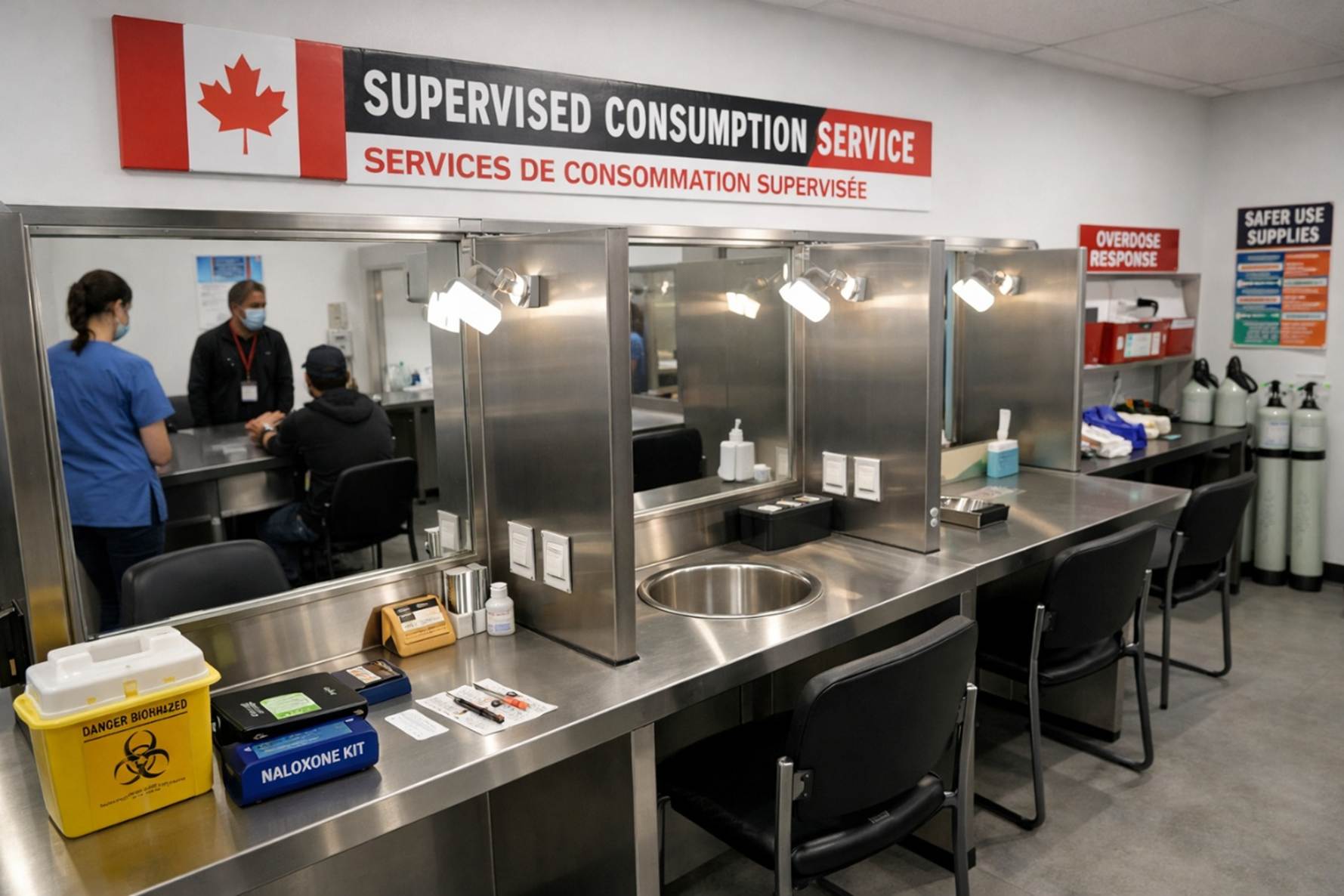
Importance: Beginning in August 2017, 9 overdose prevention sites and supervised consumption sites (OPS/SCS) began operating in Toronto, Canada. Following years of community pushback stating that these sites increased local crime and disorder, they were closed in March 2025.
Objective: To examine the association between OPS/SCS and local crime and disorder.
Main outcomes and measures: The study used monthly event counts of all assaults, auto thefts, break and enters, robberies, thefts over $5000, bicycle thefts, and thefts from motor vehicles as the 7 outcomes. Incidence within 400 m of the geolocation of each OPS/SCS before and after implementation were compared and results were pooled for population-level estimates.
Results: Within 400 m (approximately a quarter mile), OPS/SCS implementation was associated with increases in break and enters (49.88%; 95% CI, 27.03% to 76.84%), and to a lesser extent, thefts from motor vehicles (20.03%; 95% CI, -0.63% to 44.99%). However, monthly trends for break and enters (-1.19%; 95% CI, -1.71% to -0.68%), robberies (-1.32%; 95% CI, -1.93% to -0.70%), thefts over $5000 (-1.48%; 95% CI, -2.45% to -0.50%), bicycle thefts (-1.82%; 95% CI, -2.93% to -0.68%), and thefts from motor vehicles (-1.30%; 95% CI, -2.18% to -0.42%) declined. Site-specific results revealed some OPS/SCS were associated with increases in crime while most were not.
Conclusions and relevance: This ecological cohort study found that the association between Toronto’s OPS/SCS and crime was generally neutral to beneficial. OPS/SCS were associated with increases in break and enters, and to a lesser extent thefts from motor vehicles, immediately postimplementation. Incidents of crimes declined with time. (McGill University)
What the ‘research’ doesn’t tell you – The shocking realities and evidence that the research ignores.
Canadian Investigative Journalist, Derek Finkle’s Reporting, Lived and Living Experience and with ‘Safe Drug Consumption’ Sites (a small snapshot)
“This research is academic gaslighting.” Derek Finkle
Neighbourhood Impact
- Drug dealing concentration: Sites attract drug dealers to the surrounding area, creating open-air drug markets.
- Dramatic neighbourhood change: Communities experience fundamental transformations after sites open, with increased visible drug activity sold in the area
- Safety risks: Finkle points to serious incidents, including a 2021 case where a stray bullet from a gunfight between drug dealers killed a local mother near a Toronto site.
- Lewd and Threatening Behaviour: Though these are not prosecutable crimes
Accountability Issues
- Lack of acknowledgment: Site management fails to recognize their role in neighbourhood problems or take adequate safety measures.
- Delayed response: Authorities only listened to residents’ concerns after tragic incidents occurred, despite repeated warnings.
Research Critique
- Activists downplaying concerns: Finkle argues that harm reduction advocates characterize legitimate community safety concerns as mere “discomfort” rather than valid crime and disorder issues
Complete conversation: Are safe consumption sites really as dangerous as they are perceived?