
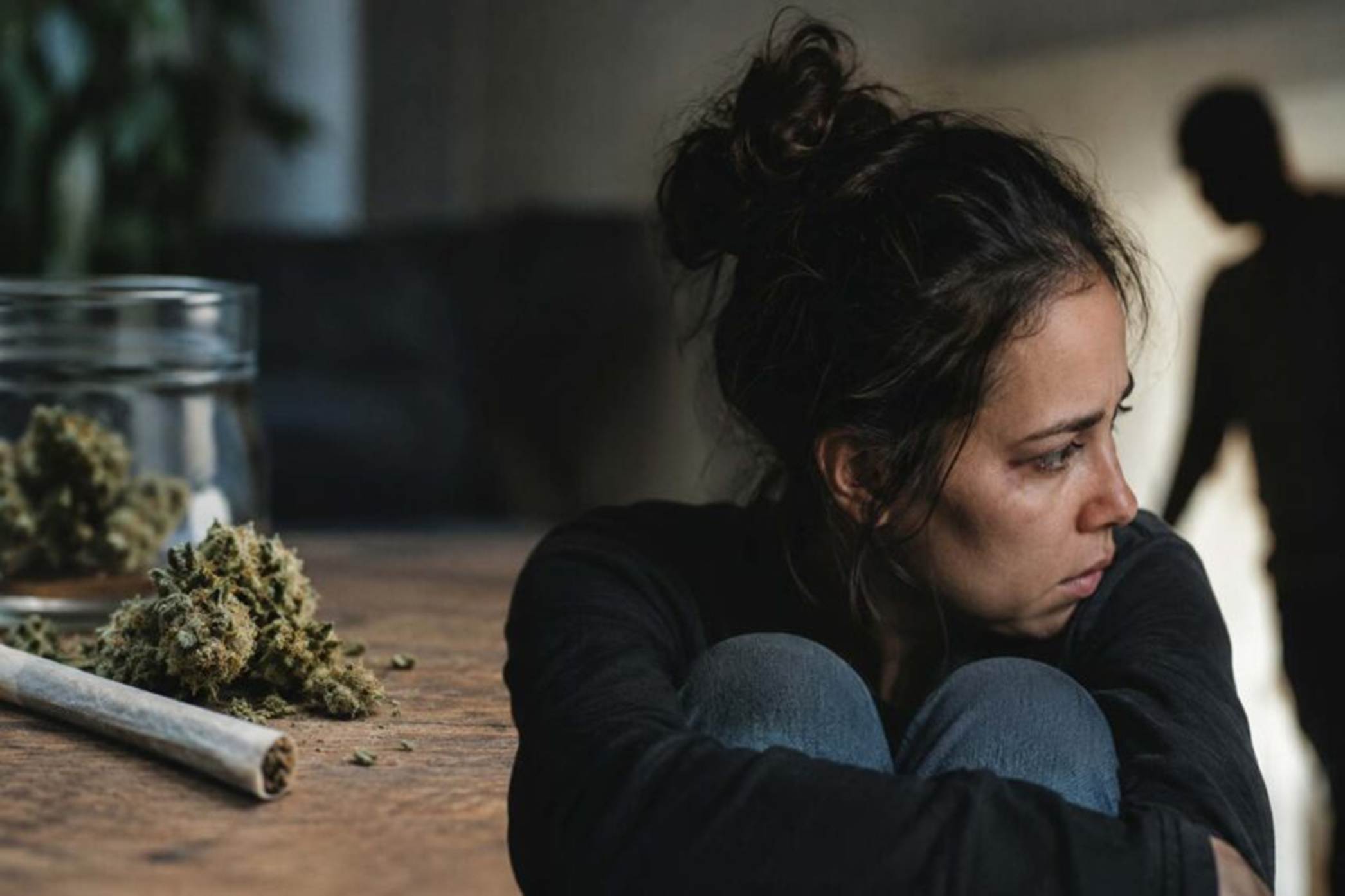
 People who use cannabis are about one and a half times as likely to become victims of violence, and the association is stronger among women than men.
That finding sits inside a review of 63 studies and more than 265,000 people, led by the Institute of Psychiatry, Psychology and Neuroscience at King’s College London and published in Psychological Medicine. Most of the coverage has led on the other half of the result, that cannabis users were roughly twice as likely to commit a violent act. The victimisation figure has been reported as a footnote, and it deserves better.
What being a victim means in this review
The researchers used the World Health Organization’s definition of violence, which covers physical, sexual and psychological violence against another person, inside intimate relationships as well as outside them. Where a study measured several kinds, the most serious one was counted.
So the victimisation finding is not confined to street assaults. It takes in violence inside the home and inside relationships, and it covers sexual and psychological harm alongside physical injury.
That matters for how the number is read. A person who uses cannabis is, on this evidence, more likely to be on the receiving end of all of it.
Why the gender difference deserves attention
The association was stronger in women. The review does not explain why, and the authors are careful not to claim a mechanism.
What can be said is that the usual public conversation about cannabis is built around a different person entirely: a young man, making a choice about his own body, whose risks are his own to carry. The victimisation finding does not fit that frame. It describes harm arriving from outside, and arriving more often for women.
Prevention work aimed at women and girls rarely covers cannabis at all. On this evidence it should.
The limits, stated plainly
The review identifies an association and does not prove that cannabis causes violence in either direction. The authors say so directly.
Cannabis use sits alongside other things that raise the risk of being harmed, including alcohol, other drugs and difficult social circumstances. Untangling those was beyond what the pooled studies allowed.
Only a small number of the included studies recorded how much or how often people used, so dose could not be tested. And most of the research was carried out before high potency products became common. The authors suggest that daily use of what is sold today could carry stronger effects, which means the figures in this review may understate the current picture rather than overstate it.
What the authors asked for
Two practical recommendations came out of the review. Mental health services should ask about cannabis use as a routine part of assessing violence risk. And public health information about cannabis should include the connection with violence.
Marta Di Forti, a co-author at King’s College London and the South London and Maudsley NHS Foundation Trust, put the clinical experience behind it:
” As a clinician, I’ve seen how heavy cannabis use can be a factor in violence. We’ve been cautious for a long time about how far we could go in describing this link, but a review of this size lets us speak with more confidence about the risks, while being careful not to stigmatise people who use cannabis more broadly.”
Senior author Sir Robin Murray made the wider point:
“As cannabis becomes more commercialised and legalised around the world, the conversation about its risks has focused mostly on the person using it. This review shows that violence, both committing it and experiencing it, needs to be part of that conversation too.”
The harm that never makes the label
Every argument for commercialising cannabis rests on a single idea: that the user is an adult making an informed choice about their own life. Harms to other people are treated as someone else’s problem, or as evidence of bad policing rather than bad product.
This review puts two findings in front of that argument. Users are more likely to harm others, and they are more likely to be harmed themselves. Neither appears on any packet, in any dispensary leaflet, or in the campaign material that sells legalisation as a matter of personal freedom.
Prevention starts from the opposite assumption, that a drug’s effects do not stop at the person using it. The question for anyone promoting cannabis as benign is which of these two numbers they intend to tell people about.
(Source: WRD News)