

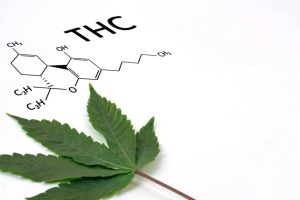
 Scientists at Virginia Commonwealth University (VCU) have built a prototype cannabis breathalyzer that could change how police detect drug use at the roadside. Forensic science professor Emanuele Alves led the federally funded project. The device is compact, inexpensive, and requires no laboratory support to deliver a result.
The timing matters. Today, 25 US states and Washington D.C. have legalised cannabis for recreational use. Across all programme types, 39 states permit cannabis in some form. That rapid expansion has created a pressing need for fast, reliable roadside drug testing, and current tools simply are not meeting it.
How the Cannabis Breathalyzer Detects THC
The prototype looks much like an asthma inhaler. It has three parts: a mouthpiece that collects exhaled breath, a reaction cartridge where the chemistry takes place, and a detection chamber that shows the result.
A person breathes into the device. Airborne THC particles then contact a layer of “Fast Blue BB” dye suspended in ballistic gelatin. When delta-9 THC is present, the reaction turns the surface a dark red colour. The cannabis breathalyzer can detect between 10 and 100 nanograms of cannabinoids. It also tells THC, CBD, and CBN apart through colour analysis, which matters enormously for avoiding false positives against legal compounds.
Professor Alves put it plainly. “The development of a breathalyzer for the early detection of marijuana’s recent use is an important matter considering the current legal status of marijuana-based products around the country.” She noted that most existing devices on the market are “merely collection devices” that still need a laboratory to complete the analysis, making them far too slow for officers working a roadside stop.
Why the THC Breath Test Has Taken So Long
Police have used alcohol breath tests reliably for decades. The science is settled, the thresholds are legally established, and the devices are cheap and widely trusted. Cannabis is a different story entirely.
There is currently no accepted on-the-spot method for measuring cannabis impairment. Labs that process THC breath samples take 24 to 48 hours to return initial results, according to biotech firm Omega Laboratories. Confirmation testing for positive screens can add another 72 hours. That kind of delay makes roadside enforcement nearly impossible.
The VCU prototype tackles this directly. Instead of simply collecting a sample, it produces an instant result through a chemical colour reaction. A portable imaging system built around a Raspberry Pi microcomputer and open-source software called ImageJ then reads and records that colour signal on the spot.
The Chemistry That Powers the Cannabis Breathalyzer
The team tried several materials before settling on the final design. Chitosan film, a naturally derived polymer, changed colour even without THC present, making it unreliable. Superabsorbent polymer hydrogels lacked the mechanical strength a field device needs.
The team switched to 3D-printed resin as a structural base. They applied the reactive dye as a top layer within ballistic gelatin. That combination stores stably at room temperature for months. It also delivers consistent, measurable results each time.
Fast Blue BB became the dye of choice for two reasons. First, it fluoresces under ultraviolet light when it contacts THC but not CBD, adding an extra confirmation layer. Second, it produces distinct colours for different cannabinoids: red for THC, orange for CBD, and purple for CBN. Linearity testing showed a strong, proportional relationship between THC concentration and signal strength, with an R² value of 0.9374 across a range of 10 to 100 nanograms.
Science Still Questions THC Impairment Thresholds
The VCU cannabis breathalyzer arrives into a genuinely contested scientific debate. A 2023 report from the National Institute of Standards and Technology found that a single THC breath measurement cannot reliably confirm recent cannabis use. A 2024 analysis went further, suggesting that policymakers may need to abandon THC concentration alone as a measure of impairment altogether.
The core problem is biological variability. Blood alcohol concentration tracks driving impairment fairly consistently across the population. THC does not behave the same way. Frequent cannabis users often carry high THC levels in their system without any meaningful impairment. Occasional users can be significantly affected at far lower concentrations. One researcher described it directly: the same level of impairment will correspond to very different THC blood concentrations depending on how often someone uses cannabis.
A 2019 study found that drivers at legal THC limits were no more statistically likely to be involved in collisions than drug-free drivers. The National Highway Traffic Safety Administration has also concluded that drug concentrations in blood do not track impairment the way alcohol does.
None of this makes a THC breath test pointless. It does mean any device must be positioned as a detection tool first, not a definitive impairment measurement, at least until researchers establish clearer thresholds.
What Comes Next
The Justice Department funded this research and published it through the Office of Justice Programs. The team has already filed a patent application, numbered PCT/US25/19696.
Professor Alves has been straightforward about what still needs doing. The device needs real-world validation. The team must confirm its accuracy and selectivity for THC under field conditions rather than laboratory settings. The portable Raspberry Pi imaging system also needs refinement before police could use it reliably during a routine stop.
Congress has called for an objective standard to measure cannabis impairment. Transport officials across the country have repeatedly stressed the need for practical, workable roadside testing. Cannabis impaired driving carries legal penalties in every US state, regardless of whether that state has legalised recreational use. Yet without a reliable, instant THC breath test, enforcing those laws consistently remains difficult.
This prototype does not solve every problem. But it establishes the chemical foundation that a practical cannabis breathalyzer will need, and that is a meaningful step forward.
(Source: WRD News)