
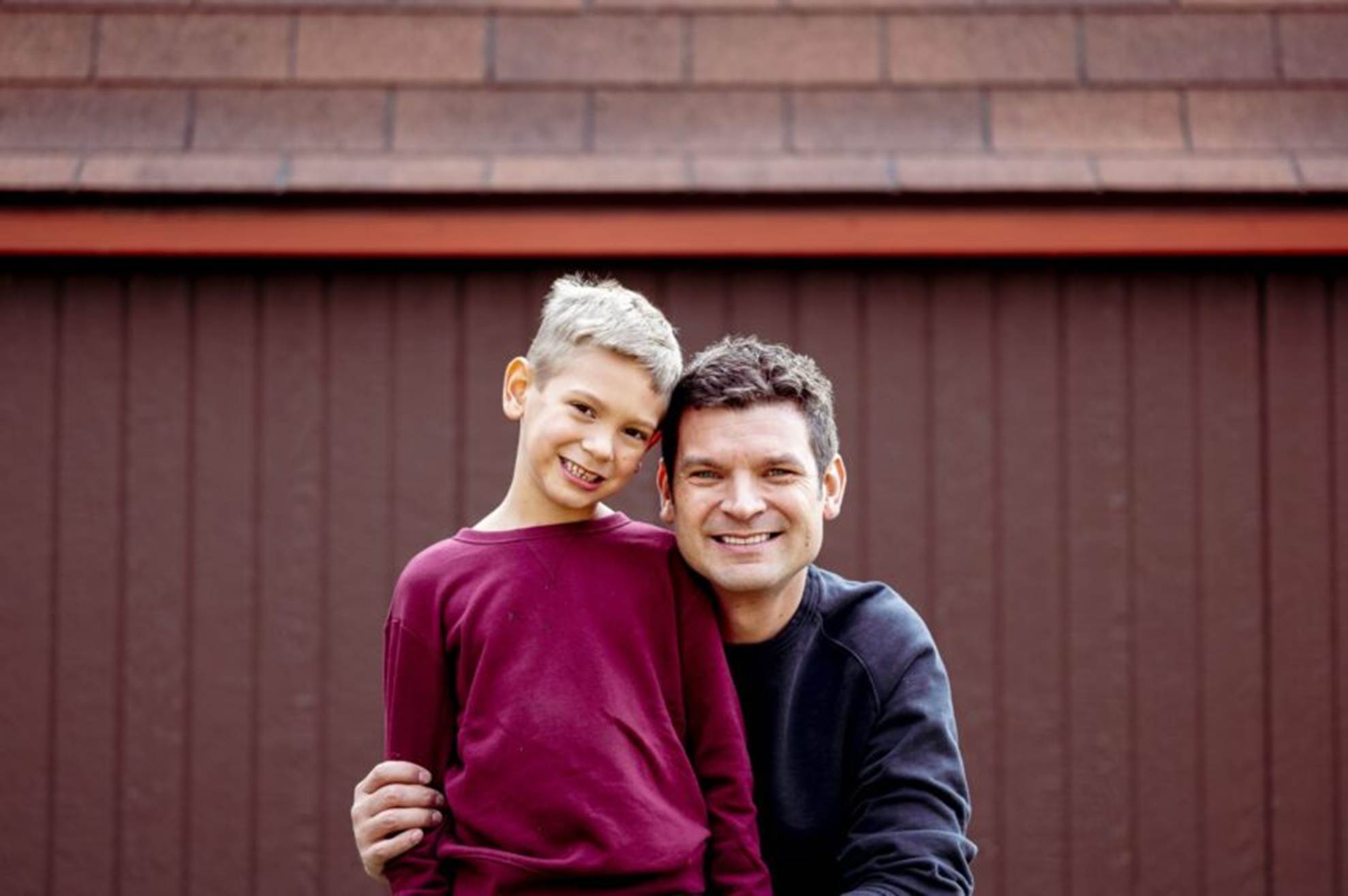
 New research suggests that childhood trauma carried by fathers long before their own children were even born may still be shaping how those children behave today. A study tracking hundreds of American families has found that children of fathers who experienced adversity growing up are noticeably more likely to show behaviour problems in their early years, a finding researchers say deserves far more attention than it currently gets.
New Study Reveals the Scale of the Link
The study, led by Natalie Grafft at Boston College’s School of Social Work and published in the American Journal of Preventive Medicine on 24 June, followed 893 fathers across the United States with children aged between one and six. Fathers were asked about adverse experiences both inside the home, things such as growing up around mental illness, substance misuse, incarceration or abuse, and in the wider community, including discrimination, bullying or unsafe neighbourhoods. Children of fathers who reported even one such experience at home were 28 per cent more likely to have behaviour problems than children whose fathers reported none, and the figure rose to 33 per cent for fathers with two or more. Community based adversity showed a similar climb, with a 32 per cent higher likelihood for one experience and 40 per cent for two or more.
Fathers’ Mental Health as the Missing Link
What makes the study genuinely useful is that it does not stop at correlation. Fathers’ depressive symptoms accounted for more than a third of the link between childhood adversity at home and their children’s behaviour problems, and over a quarter of the link tied to community based adversity. In plain terms, a father’s mental health carries a measurable piece of his own childhood trauma forward into his child’s daily life. The researchers point to an obvious and fairly simple fix, screening fathers for depression during routine paediatric visits, something that rarely happens compared with how often mothers are asked.
Childhood Trauma and the Path to Substance Use
None of this exists in isolation. Childhood trauma has long been tied to substance use later in life, and the scale of that link is difficult to ignore. One frequently cited study found that adults who had four or more adverse childhood experiences were five to twelve times more likely to use illicit drugs than adults with none. The explanation is not that trauma makes people reckless. Repeated early adversity actually rewires the body’s stress response, leaving the brain’s threat detector overactive while the part responsible for weighing consequences loses some of its influence. Alcohol, opioids and stimulants can each become an attempt at self-medication for a nervous system that never learned how to settle on its own.
Why Treatment Often Falls Short
This is also why treatment so often falls short for people carrying unresolved childhood trauma. Trust is usually the first thing damaged by early adversity, and for many people entering treatment feels less like safety and more like a return to old dynamics they learned to fear. People with concurrent PTSD and a substance use disorder tend to leave treatment earlier and relapse more often, particularly when something in the process triggers old wounds. Given that more than 46 million Americans aged 12 or older met the criteria for a substance use disorder in 2021 alone, according to the National Survey on Drug Use and Health, the scale of unaddressed childhood adversity behind that figure is considerable.
Clinicians Are Beginning to Adjust
Clinicians are beginning to adjust. Screening tools such as the ACE questionnaire and the Trauma Screening Questionnaire are increasingly used early in treatment, and integrated approaches such as Seeking Safety and trauma adapted cognitive behavioural therapy have shown better outcomes than treating trauma and substance use separately. A training session held earlier this year at Johns Hopkins Bayview, led by addiction psychiatrist Dr Denis Antoine II, drew clinicians, counsellors and peer specialists specifically to work through how childhood trauma complicates recovery, a sign the field is taking the connection seriously.
A Right Enshrined in International Law
There is also a legal dimension worth remembering. Article 33 of the United Nations Convention on the Rights of the Child is the only clause in the entire convention that names drugs directly, requiring signatory states to take legislative, social and educational steps to protect children from illicit drugs and from being drawn into their production or trafficking. Exposure to drug use environments is itself one of the original seven categories used to measure childhood adversity, and it tends to travel alongside, and often worsen, the others.
What This Means Going Forward
Taken together, the picture is one of childhood trauma quietly passing from one generation to the next through pathways that are only now becoming visible in the data. Screening fathers as routinely as mothers, treating trauma and substance use as one connected story rather than two separate problems, and taking early exposure seriously as a matter of protection rather than an afterthought, all point in the same direction. The two year old still crying over a spilled cup of juice may be telling researchers something they are only just beginning to hear.
By Dalgarno Institute
Sources