

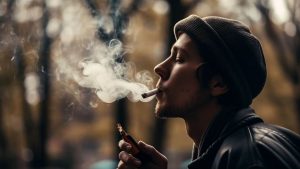
 Rising rates of cannabis use worldwide have renewed scientific attention on a question long overshadowed by the tobacco debate: what does inhaling burnt cannabis actually do to the human airway? A newly published Canadian investigation, presented recently through the IASIC Speaker Series webinar “The Lung Health Implications of Cannabis Smoking,” moderated by Dr Russell Kamer, MD, FACP, has added the most granular evidence yet that habitual cannabis smoking is not the respiratory non-event some casual users assume it to be.
The CANUCK Study: A Multi-Layered Investigation
The centrepiece of the new evidence is the Canadian Users of Cannabis Smoke (CANUCK) study, published in the European Respiratory Journal and led by a team including Dr Janice Leung, an Assistant Professor of Medicine at the University of British Columbia and a respirologist at St Paul’s Hospital in Vancouver. The study is notable for combining clinical symptom reporting, lung-function testing, advanced imaging and molecular airway analysis in the same cohort, rather than relying on a single measure of harm.
Researchers found that cannabis-smoking participants reported measurably worse respiratory symptoms than people who had never smoked, and that those with the highest cumulative “joint-year” exposure showed reduced pre-bronchodilator FEV1/FVC ratios, lower mid-expiratory airflow, more radiographic emphysema and more ventilation abnormalities on imaging compared with never-smokers. At the cellular level, airway epithelial brushings from cannabis smokers revealed an altered immune signature — an increased type 2 immune response paired with a decreased type 17 response — alongside elevated expression of the MUC5AC mucus-producing gene, a change that correlated with worse clinical outcomes and imaging abnormalities in laboratory cell cultures.
Speaking about the findings, Dr Leung described the project as a deliberately comprehensive effort: “We decided to do a really detailed approach to cannabis smoking and its impact on the airway from clinical to imaging to functional outputs all the way down to the molecular airway cell level,” noting that greater smoking severity tracked with worse respiratory symptom scores and more pronounced functional and imaging abnormalities.
Where the New Findings Sit Within the Broader Evidence Base
The CANUCK results reinforce, rather than overturn, a body of prior research that has consistently linked chronic cannabis smoking to chronic bronchitis-type symptoms — cough, sputum production and wheeze — even as evidence for classic airflow obstruction has remained more equivocal. A 2016 systematic review found that eight of nine studies measuring respiratory symptoms reported significantly higher complaint rates among cannabis smokers, with odds ratios as high as nearly three compared with non-smoking controls, while lung volumes (FVC) tended to increase rather than decrease with cannabis exposure, an effect whose mechanism remains poorly understood.
A 2018 systematic review and meta-analysis reached a similar conclusion, pooling data from prospective and cross-sectional studies to show significantly elevated risk of cough, sputum production, wheezing and dyspnoea among marijuana users, while judging the evidence on pulmonary function decline and obstructive lung disease “insufficient” to draw firm conclusions. Earlier work published in the Annals of the American Thoracic Society similarly concluded that regular cannabis smoking causes visible injury to the large airways and chronic bronchitis-type symptoms that subside on cessation, but does not appear to produce the same degree of fixed airflow obstruction associated with cigarette smoking.
The U.S. National Academies of Sciences’ influential 2017 consensus report classified the cannabis-COPD relationship cautiously, finding only limited evidence linking occasional cannabis smoking to COPD risk once tobacco use is controlled for, but substantial evidence connecting long-term cannabis smoking to worse respiratory symptoms and more frequent chronic bronchitis episodes. A more recent 2024 state-of-the-art review concluded that cannabis smoke irritates the bronchial tree, is strongly linked to chronic bronchitis, impairs alveolar macrophage antimicrobial function, and is a risk factor for bullous lung disease and spontaneous pneumothorax, while stopping short of establishing a clear association with COPD itself.
Points of Persistent Scientific Uncertainty
Not every dimension of cannabis-related lung harm is settled. The relationship between cannabis smoking and lung cancer remains genuinely contested: a 2025 review noted the link “remains inconclusive,” citing conflicting epidemiological evidence despite cannabis smoke sharing carcinogenic constituents, including polycyclic aromatic hydrocarbons, with tobacco smoke. Similarly, moderate cannabis use does not appear to meaningfully impair lung function in several analyses, whereas heavy, prolonged use may cause airflow obstruction without producing the tobacco-characteristic emphysema pattern.
This nuance matters clinically. One widely cited case-control analysis found that tobacco-only smokers, but not cannabis-only smokers, showed significantly elevated odds of COPD compared with non-smokers — yet combined cannabis-and-tobacco use carried a markedly higher risk of both respiratory symptoms and COPD than either substance alone, particularly beyond a lifetime threshold of roughly 50 marijuana cigarettes. This suggests an additive or synergistic harm profile when cannabis and tobacco are co-used, a pattern of considerable relevance given how frequently the two are combined in real-world use.
Public Health Bodies Converge on a Cautionary Message
Public health authorities have already begun translating this accumulating evidence into consumer guidance. The U.S. Centres for Disease Control and Prevention states plainly that smoked cannabis, regardless of the method of administration, “can harm lung tissues and cause scarring and damage to small blood vessels,” and that cannabis smoke contains many of the same toxins, irritants and carcinogens found in tobacco smoke. The American Lung Association has gone further, explicitly cautioning the public against smoking marijuana, citing evidence that marijuana smoke injures the cell linings of large airways, suppresses immune defences against infection, and has been associated on CT imaging with greater airway thickening, inflammation and emphysema compared with both non-smokers and tobacco-only smokers.
Health outcome | Strength of evidence |
Chronic bronchitis-type symptoms (cough, sputum, wheeze) | Substantial/consistent across studies |
Airflow obstruction / COPD from cannabis alone | Limited, inconsistent |
Combined cannabis + tobacco COPD risk | Elevated relative to either alone |
Emphysema and imaging abnormalities (heavy use) | Emerging, strengthened by CANUCK |
Lung cancer risk | Inconclusive, contested |
Airway epithelial immune/mucin dysregulation | Newly characterised |
Why the Molecular Findings Matter for Prevention
What distinguishes the CANUCK study from much of the earlier literature is its move beyond symptom questionnaires and spirometry into airway cell biology. By demonstrating that heavy cannabis exposure alters immune signalling and mucin gene expression in a way that correlates with worse clinical and imaging outcomes, the research offers a plausible biological mechanism for the symptomatic and functional changes long observed in cannabis smokers. This mechanistic layer strengthens the case that respiratory harms from cannabis smoke are not merely coincidental with heavy use but reflect a dose-dependent biological injury pathway, comparable in structure, if not in magnitude, to that seen with tobacco.
As Dr Leung and colleagues note, the findings “underscore the concerns for future respiratory morbidities related to persistent cannabis use,” a conclusion with direct relevance for clinicians counselling patients and for policymakers navigating an era of expanding legal cannabis access. With global cannabis consumption continuing to climb amid legalisation trends across North America and elsewhere, researchers argue that larger, longer prospective studies combining spirometry with high-resolution imaging will be essential to fully map the trajectory of cannabis-related lung disease.
Sources:
- Blevins Primeau, A. S. (2025). Cannabis use and its impact on respiratory physiology and lung health. PMC. https://pmc.ncbi.nlm.nih.gov/articles/PMC12516480/
- Centres for Disease Control and Prevention. (2024, February 25). Cannabis and lung health. https://www.cdc.gov/cannabis/health-effects/lung-health.html
- European Respiratory Journal. (2026, January 28). ERJ podcast January 2026: Cannabis and the lung [Podcast interview with J. Leung]. Eur Respir J, 67, 26E6701. https://doi.org/10.1183/13993003.E6701-2026
- Ghasemiesfe, M., Ravi, D., Vali, M., Korenstein, D., Arjomandi, M., Frank, J., Austin, P. C., & Keyhani, S. (2018). Marijuana use, respiratory symptoms, and pulmonary function. Annals of Internal Medicine. https://pubmed.ncbi.nlm.nih.gov/29971337/
- Ghasemiesfe, M., Barrow, B., Leonard, S., Keyhani, S., & Korenstein, D. (2019). Effects of marijuana smoking on the lung. Annals of the American Thoracic Society. https://pubmed.ncbi.nlm.nih.gov/23802821/
- Leung, C. et al. (2026). The Canadian Users of Cannabis Smoke (CANUCK) study. European Respiratory Journal. https://pubmed.ncbi.nlm.nih.gov/41198398/
- National Academies of Sciences, Engineering, and Medicine. (2017). Respiratory disease. In The health effects of cannabis and cannabinoids: The current state of evidence and recommendations for research (Chapter 7). National Academies Press. https://www.nationalacademies.org/read/24625/chapter/9
- Rezaei, N., et al. (2024). Effects of cannabis smoking on the respiratory system: A state-of-the-art review. Respiratory Medicine. https://www.sciencedirect.com/science/article/pii/S0954611123003827
- American Lung Association. (n.d.). Marijuana and lung health. Retrieved August 11, 2026, from https://www.lung.org/quit-smoking/smoking-facts/health-effects/marijuana-and-lung-health
- Tashkin, D. P. (2016). Effect of cannabis smoking on lung function and respiratory symptoms. PMC. https://pmc.ncbi.nlm.nih.gov/articles/PMC5072387/
- Cannabis and lung health: Does the bad outweigh the good? [PDF]. https://d-nb.info/1250157714/34
- Cannabis – a rewritten history and its pulmonary implications. PMC. https://pmc.ncbi.nlm.nih.gov/articles/PMC9923077/