
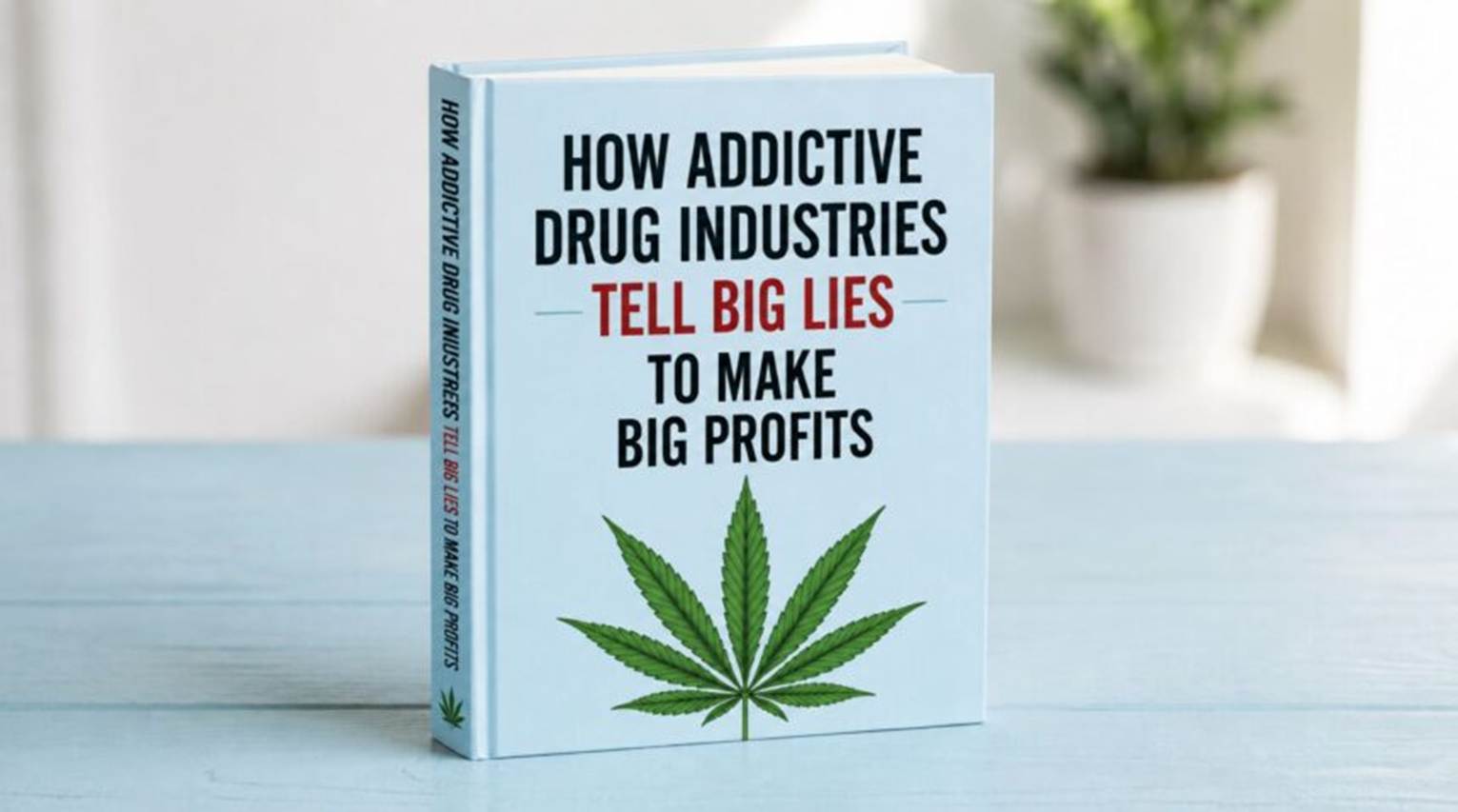
 A new book argues that tobacco companies wrote the original addictive drug industry playbook. It claims the marijuana industry has quietly copied that playbook, strategy for strategy. The book is Marketing Pleasure: How Addictive Drug Industries Tell Big Lies to Make Big Profits, by Sue Rusche. Her argument is simple. Every commercial industry built on an addictive substance follows the same script. The public, she writes, keeps mistaking that script for genuine debate.
A Prevention Leader, Not an Outside Critic
Rusche spent forty six years running National Families in Action. The organisation helped lead the parent movement of the late 1970s and early 1980s. Her prologue is personal. She describes losing her father to a heart attack, and later her mother and brother to smoking related illness. At the same time, she worked to reduce youth marijuana use with a cigarette in her hand. By her own account, the contradiction eventually became impossible to ignore. That personal history sits behind the book’s central claim. Nicotine, alcohol, marijuana and opioids are not separate problems. They are variations on one commercial pattern.
Denying Harm to Protect Profit
The book calls this pattern biological capture. It is the process by which an industry must exploit human biology to keep people buying its product. Rusche states it plainly. Once a government legalises a drug for medical use, the industry making it moves to deny harm and increase use. The goal is protecting shareholders. Public health scientists move in the opposite direction. They work to identify harm and reduce use. She backs this with a stark comparison. Tobacco kills around 480,000 Americans a year. Alcohol kills around 178,000. Opioids have killed more than a million since the Food and Drug Administration approved OxyContin in 1995. Understanding the profit motive common to all four, she argues, is the key. It shifts responsibility from the people harmed to the industries doing the harming.
Same Tactics, New Drug
Rusche draws direct parallels between the drug industry marketing tactics tobacco once used and what marijuana companies do today. She points to the 1998 Master Settlement Agreement, which forced the Joe Camel campaign off a Times Square billboard. The book then describes a marijuana company floating a giant lit joint over Broadway, timed to the 4/20 cannabis holiday. An industry spokesperson defended the stunt to trade press as necessary to normalise the plant. Rusche treats that line as an admission rather than a defence.
A similar echo shows up in vaping. The founders who later built Juul first sold a marijuana vaporiser called Pax. They moved half a million units at nearly 250 dollars each before Juul ever launched. Rusche cites research showing marijuana vaping rose sevenfold among American and Canadian teenagers between 2013 and 2020. That rise happened in the same markets the company targeted.
Who Actually Led Legalisation
One of the book’s sharper claims concerns who actually drove marijuana legalisation. Rusche states it was not scientists or doctors. Instead, she names a Santa Monica public relations firm, financed by three billionaires. A group that later became the leading legalisation advocacy organisation hired that firm. It shaped the ballot initiatives that first legalised marijuana for medical use in California. The same model then spread to other states, part of the drug industry marketing tactics Rusche describes in the book. Some of those campaigns, she notes, claimed marijuana could treat cancer. She contrasts that claim with newer research pointing the other way. That research treats marijuana as a possible contributing factor in some cancers, rather than a cure.
Rusche also flags a practical consequence of loosely worded legalisation laws. New York permits households to grow up to five pounds of marijuana. By her own arithmetic, an ounce produces roughly sixty joints. Five pounds works out to around 4,800 joints from a single household crop, far beyond anything resembling personal use.
Proof That Demand Reduction Works
The book is not only a warning. Rusche uses her own organisation’s history as evidence that prevention works when people take it seriously. National survey data she cites tells a striking story. Adolescent lifetime marijuana use fell from 31 percent in 1979 to 11 percent in 1992, nearly a two thirds drop. Daily use among high school seniors fell from around 11 percent to under 2 percent over the same period. That shift, she argues, followed directly from parents organising and refusing industry framing. They demanded that policy protect children, not commercial interests. She believes the same template is available today. The addictive drug industry playbook, she suggests, only wins when nobody names it.
Where to Find It
Marketing Pleasure is available now. Rusche has structured its proceeds to support the cause the book argues for. Once the book covers production costs, seventy five percent of proceeds will go to the University of California, San Francisco. That university is digitising National Families in Action’s archive of drug industry research. The remaining share goes to Smart Approaches to Marijuana and the Foundation for Drug Policy Solutions. It also supports Georgians for Responsible Marijuana Policy. For anyone working in prevention, treatment or public health policy, that is worth noting. It is a rare case of a book’s business model matching its argument.
Source: Marketing Pleasure: How Addictive Drug Industries Tell Big Lies to Make Big Profits (WRD News)