
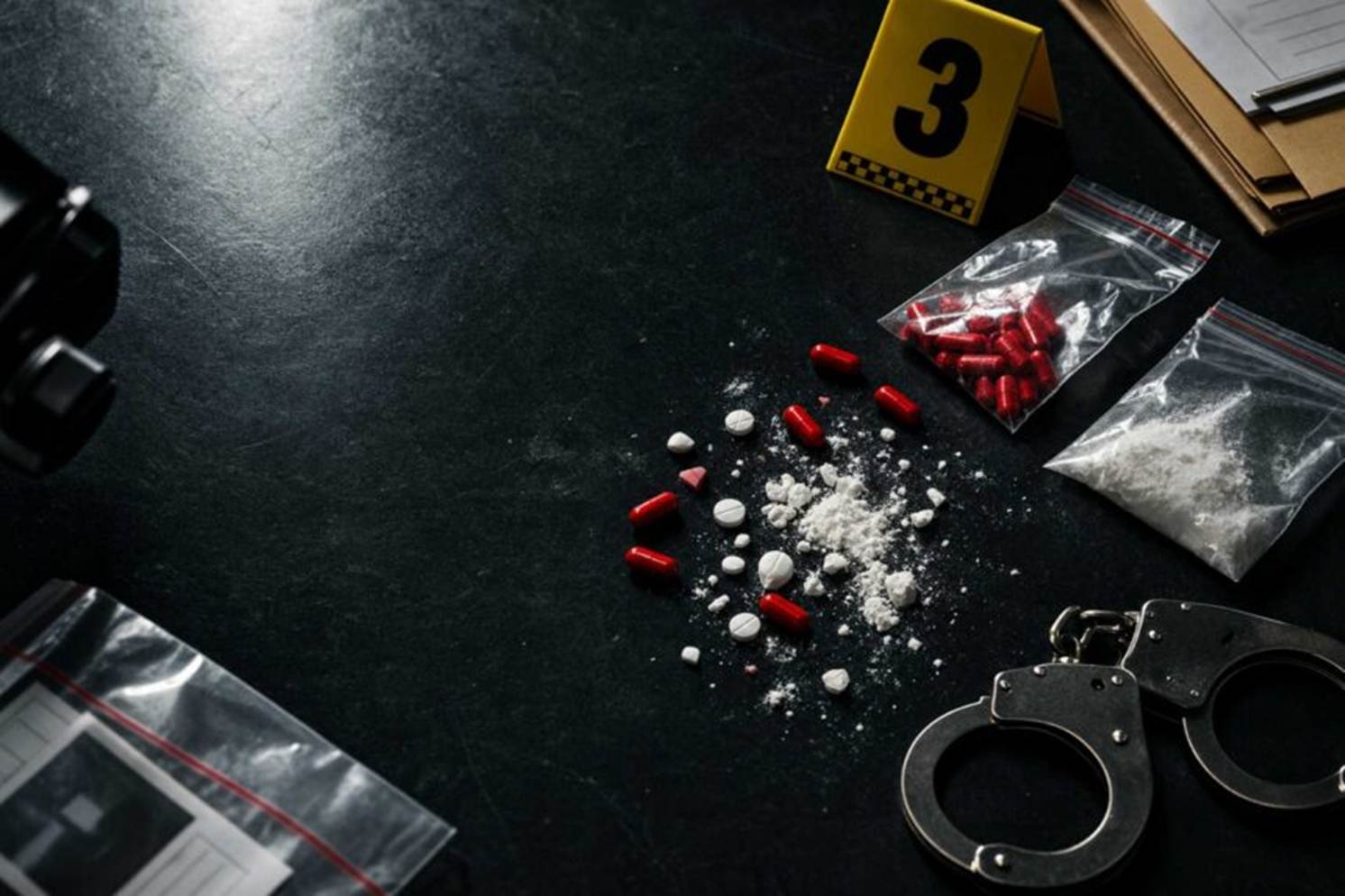
 The Australian Federal Police’s (AFP) record makes one point difficult to dismiss: illicit drug markets are not victimless lifestyle choices. They are a major revenue stream for transnational organised crime, impose serious social, as well as public health and welfare costs, and require sustained policing alongside credible prevention, early intervention, treatment and recovery.
This article draws on the Dalgarno Institute’s critique of the narrowing of “harm minimisation” into harm reduction alone. Its central argument is worth testing seriously: when public policy treats ongoing illicit drug use as inevitable, it risks communicating permission rather than prevention. But the strongest case is not for abandoning harm reduction; it is for restoring the full Australian policy framework—demand reduction, supply reduction and harm reduction—rather than allowing any one pillar to dominate.
A war that cannot be abandoned
For years, Australians have heard (ad nauseum) that the “war on drugs” has failed. The phrase carries force because it points to real limitations: prohibition has not eliminated demand, major seizures do not end supply, and punitive responses alone cannot resolve dependence, trauma, poverty, mental ill-health or social exclusion. However, that is not what this caricature on ‘war’ was meant to represent. Like all propagandised mantras the real intent is lost – it’s a war not against people, but a product that weaponizes certain demographics who perpetuate a war against society as they twist their perfidious agenda into a War FOR Drugs.
Yet the alternative proposition—that Australia should simply stop fighting illicit drug markets—is neither humane nor realistic.
Ernest Hemingway once opined; “Once we have a war there is only one thing to do. I must be won. For defeat brings worst things than any that can ever happen in war.”
For those who care to look, we are now seeing in global spaces what a partial capitulation to the drug using world has created. The social, familial, community, health and productivity chaos is worse than any actions of this ‘war’ against psychotropic toxins.
The AFP’s work illustrates why. Its mandate is not merely to arrest individual users; it targets criminal enterprises that import drugs, launder proceeds, exploit vulnerable people and generate violence and corruption. In 2024–25, the AFP reported a transnational-crime return on investment of 78.9, calculated from an estimated $12.6 billion in social harm avoided relative to the cost of relevant investigations. The index includes consequences such as health care, rehabilitation, drug-related crime, road crashes, clean-up costs and lost productivity. These are estimates, not cash savings deposited in a government account—but they make visible the scale of harm the AFP is attempting to prevent.
The AFP’s 2023–24 annual report recorded the seizure of 31.3 tonnes of illicit drugs and precursors, restraint of more than $175.8 million in criminal assets, and criminal charges against 318 people. In 2022–23, it reported 30 tonnes of drug and precursor seizures and estimated that completed investigations prevented $9.8 billion in drug-related harm.
These figures do not prove that policing alone lowers national drug use. In fact, large seizures can indicate both effective enforcement and a large, persistent market. But they do rebut a dangerously casual narrative: that illicit-drug use is a private matter separated from organised crime. In Australia, demand finances enterprises that seek profit from addiction, unsafe supply, coercion, corruption and violence.
The appropriate conclusion is not “declare victory” in a war that has not been won. It is: do not raise the white flag in a conflict in which the beneficiaries of surrender are criminal networks and the casualty is civil society itself.
What the AFP evidence shows
The contemporary AFP model is broader than a simplistic “war” metaphor suggests. It combines prevention, disruption, enforcement and international partnerships. Its 2024–25 performance statement describes disruption as lawful action that interferes with, delays or complicates criminal activity and reduces an enterprise’s capability, influence and capacity to cause harm.
AFP indicator | Reported result | What it means |
Social-harm estimate from transnational-crime work, 2024–25 | $12.6 billion | AFP estimate of harm avoided through drug and financial-crime investigations |
Transnational return on investment, 2024–25 | 78.9 | Estimated benefit divided by relevant investigation costs |
Criminal assets restrained, 2024–25 | More than $143.6 million | Targets the financial incentive sustaining serious crime |
AFP briefs accepted for prosecution, 2024–25 | 97% of 793 assessed briefs | Indicates that most briefs assessed by the Commonwealth DPP were accepted for prosecution |
Drug-related share of AFP briefs assessed, 2024–25 | 33% | Drug crime remained the largest identified category in this part of AFP prosecutorial work |
Illicit drugs and precursors seized, 2023–24 | 31.3 tonnes | A measure of interdiction activity, not a complete measure of market size |
AFP figures should be used carefully. “Harm avoided” is a modelled measure based on the AFP’s Drug Harm Index, not a directly observable count of harms prevented. Likewise, seizure totals are not reliable proof of prevalence rising or falling. They do, however, provide strong evidence that Australia faces a substantial organised criminal supply chain and that law enforcement has a legitimate role in disrupting it.
This is also why demand reduction matters. Every user who never begins, delays initiation, receives effective treatment, sustains recovery, or decides not to purchase from an illicit market reduces the customer base on which criminal groups depend.
Harm minimisation was meant to be balanced
Australia’s current National Drug Strategy does not define harm minimisation as a synonym for “harm reduction.” It explicitly rests on three pillars:
- Demand reduction: preventing uptake, delaying first use, reducing harmful use, and supporting recovery.
- Supply reduction: restricting availability and access to drugs and precursors, including illicit-drug availability.
- Harm reduction: reducing the adverse health, social and economic consequences of drug use and drug markets.
That architecture is important. It recognises two truths at once:
- People who use drugs deserve dignity, health care and a pathway to recovery—not humiliation, abandonment or preventable death.
- A compassionate society should not be indifferent to drug use, treat dependence as an identity to be maintained, or imply that prevention and drugfree recovery are naïve or illegitimate goals.
The Dalgarno Institute’s critique is directed at what it sees as a policy drift: harm minimisation being reduced in practice to “safer drug use,” while prevention, early intervention, abstinence-oriented recovery and supply control are marginalised. Its research and monitoring have revealed that this narrowing can foster an expectation that drug use is normal, permanent and socially inevitable. That is an advocacy position, not a neutral evaluation, and several of its historical claims require independent verification before being presented as settled fact. But its underlying warning deserves engagement: public messaging can shape perceived risk, social norms and young people’s expectations.
The policy error is not harm reduction itself. The error is harm-reduction absolutism—the idea that reducing immediate risk while use continues is the only compassionate or evidence-informed objective.
A needle-and-syringe program, naloxone access, opioid substitution treatment or overdose response can save lives, yes, but…Saving a life today is not an endorsement of drug use tomorrow. It can be the essential first step that allows someone to survive long enough to enter treatment, reconnect with family, regain stability and recover.
Equally, a service system that offers only ways to use more safely, without consistently offering treatment, recovery, peer support, housing, mental-health care, family support and prevention, risks becoming a maintenance system rather than a liberation system.
Is Australia normalising drug use?
The evidence requires precision as Australia’s illicit-drug use has not been static.
In 2022–23, an estimated 3.9 million Australians aged 14 and over—17.9% of the population—reported using an illicit drug in the preceding 12 months, up from 3.4 million, or 16.4%, in 2019. The comparable proportions were 13% in 2007 and 18% in 2022–23. Cannabis remained the most commonly used illicit drug at 11.5%, followed by cocaine at 4.5% and hallucinogens at 2.4%.
The rise does not, by itself, establish that harm-reduction policy alone caused normalisation. Survey changes, drug-market shifts, new substances, cohort effects, social media, affordability, availability, nightlife, broader cultural attitudes and reporting behaviour can all affect prevalence. A responsible article should not claim causal certainty without evidence capable of separating these factors.
Still, the data undermine complacency. The number of people reporting recent illicit-drug use increased, cocaine use remained high at around one million people, and recent hallucinogen use rose from approximately 300,000 people in 2019 to 500,000 in 2022–23. Ketamine use increased from 0.9% to 1.4% of the population, or roughly 300,000 people.
The problem is therefore not simply that drug use exists. It is that public language can slide from compassion toward cultural accommodation:
- “We must keep people alive” can become “use is normal and unavoidable.”
- “Do not stigmatise people who use drugs” can be distorted into “do not make moral or health-based judgements about drug use.”
- “We need safer services” can become “recovery, abstinence and prevention are unrealistic.”
- “Criminal penalties have limits” can become “supply control is pointless.”
Those are not equivalent propositions.
A healthy public culture can reject shame and cruelty while still saying plainly: illicit drug use carries real risk; young people deserve messages that encourage non-use and delayed use; recovery is possible; and organised crime should not be permitted to market dangerous substances as ordinary consumer products.
A better Australian settlement
Australia does not need a return to indiscriminate punishment or rhetoric that treats every person who uses drugs as a criminal enemy, but also not treating this demand increasing activity as a benign personal hobby. It needs a prevention-and-recovery-centred strategy that retains credible law enforcement and life-saving harm reduction that work together to delay/deny uptake and precipitate the exit from substance use.
- Restore prevention as a first-order priority
Prevention should mean more than occasional school presentations. It should include age-appropriate, evidence-informed education; parent and community capability; early identification of risk; mental-health support; family interventions; and clear messages that non-use is the safest and best health promoting option. This very much includes building robust generational human capacity through resilience and other psycho-social health and well-being strengthening resources.
The National Drug Strategy itself frames demand reduction around preventing uptake, delaying first use, reducing harmful use and supporting recovery. That objective should be visible in funding, school policy, public communications and service commissioning—not merely preserved in a strategy document.
- Treat recovery as an outcome, not an embarrassment
People should be offered more than survival. Treatment pathways should be timely, affordable and connected to stable housing, mental-health care, family support, employment and community belonging. This can and should include the Judicial Educator to help facilitate the recovery journey for those caught in behavioural harms to themselves and their communities.
Not every person will pursue abstinence immediately, and services should not refuse care while someone is still using if that using pattern is not recalcitrant. Unabated continued use with impunity should not be ‘serviced’ to enable continued drug use, that is an egregious misuse of resources (this is where the Judicial Educator is most effective at facilitating change) However, abstinence and sustained recovery should remain legitimate, positive and adequately funded outcomes—not framed as moralistic relics.
- Retain harm reduction, with clear boundaries
Harm reduction should remain a component of the continuum of care because preventable death, infection and injury are unacceptable. But it should be paired with active engagement toward treatment and recovery, and must never communicated as a settled endpoint.
The test for any intervention should be rigorous: does it produce a net reduction in death, disease, injury, victimisation, criminal exploitation and long-term dependence? Does it connect people to treatment? Does it reduce, rather than entrench, the market for illicit drugs?
- Support the AFP’s organised-crime mission
The AFP’s work should be understood as part of public health and community protection, not as separate from it. The propagandised faux argument that ‘we cannot arrest our way of this this problem’ is as true or false as the fact that we ‘cannot treat our way out of this problem’ either. Supply and demand reduction go hand in hand, but as long as other policy interpretations undermine these two pillars of the National Drug Strategy, they will always struggle eliminate all demand. But, again, neither can treatment or education neutralise multinational criminal markets on their own.
The AFP’s focus on transnational serious organised crime, criminal assets, intelligence-led disruption and partnerships across jurisdictions is essential precisely because drug markets are not benign. The AFP reports that its investigations can take from six months to three years and often involve complex domestic and international collaboration.
- Make public language honest
Australians should hear two messages without contradiction:
- No person should be discarded because of drug use or dependence.
- No community should be asked to accept illicit drug use, drug-market violence or preventable addiction as normal.
That is neither a punitive slogan nor a permissive one. It is a commitment to the continuum of care that aims beyond the management of damage and to ever narrow the gap between first and last use of a substance to the point where it is never engaged with at all.
The Compromise?
The choice is not between a cruel “war on drug users” and a compassionate acceptance of drug use – that framing is false.
The real choice is whether Australia maintains a balanced commitment to prevent use, disrupt supply, reduce immediate harms and support recovery—or whether it allows one necessary component, harm reduction, to become the entire moral and policy horizon.
The Dalgarno Institute is right to insist that language and policy priorities matter. When prevention is muted, recovery is dismissed and illicit drug use is discussed as socially inevitable, the culture can drift toward normalisation. But the answer cannot be to abandon life-saving interventions or to equate a person who uses drugs with the criminal organisations that profit from supplying them.
Australia should be uncompromising toward organised drug crime, relentless about protecting children and young people from first use, practical about reducing avoidable harms, and ambitious about recovery. The white flag should not be raised in this cultural chaos and carnage—and most certainly not to the illicit markets and cultural resignation that keep substance users trapped.
“There is one thing worse than war – that is losing it!”
(Source: WRD News)